

Understanding Health Insurance: A Beginner’s Guide for Individual Coverage in Colorado
The terms and choices that decide what you actually pay.
Health insurance isn’t as complicated as it looks. Five terms decide what you pay, three choices decide which plan fits you, and a few dates decide when you can sign up.
This guide is for individuals buying their own coverage through the ACA Marketplace, not people weighing employer plan tiered options or looking for education on Medicare. We’ll walk through each piece in plain English, with real dollar examples and the Colorado details that matter for 2027.
Affordable Care Act (ACA) plans are the most popular type of health insurance for individuals who do not have coverage through a group employer plan or government program like Medicaid or Medicare. Research from KFF confirms that over 90% of all consumers buying independent insurance choose ACA plans, leaving a fraction enrolled in alternatives like health shares, fixed indemnity policies, and short-term health plans. For that reason, today we’ll be covering ACA plans. They remain the gold standard for independent buyers because you cannot be turned down for a pre-existing condition and, depending on your income, you may qualify for a heavily discounted plan.
The 5 Terms That Decide What You Pay
Premium: What you pay every month to keep the plan, whether you use it or not. We like to think of this as a monthly subscription, like Netflix, this number won’t go up and down throughout the year like an out-of-pocket medical bill might.
Deductible: What you pay for covered care before the plan starts sharing the cost.
Copay: A flat fee for a specific service, like $30 for a doctor visit. On many plans, some copays apply even before you meet your deductible.
Coinsurance: Your percentage of the bill after you meet the deductible. With 20% coinsurance, you pay $20 of every $100.
Out-of-pocket maximum: The most you’ll pay for covered, in-network care in a year. Once you hit it, the plan pays 100% for the rest of the year. Your premiums don’t count toward it. For most 2027 plans, federal rules cap it at $12,000 for one person and $24,000 for a family.
What it Looks Like in Real Dollars
Example plan:
Premium: $400 a month ($4,800 a year)
Deductible: $3,000 (what you pay for covered care before the plan starts kicking in)
Copay: $30 per doctor visit
Coinsurance: 20%
Out-of-pocket max: $8,000
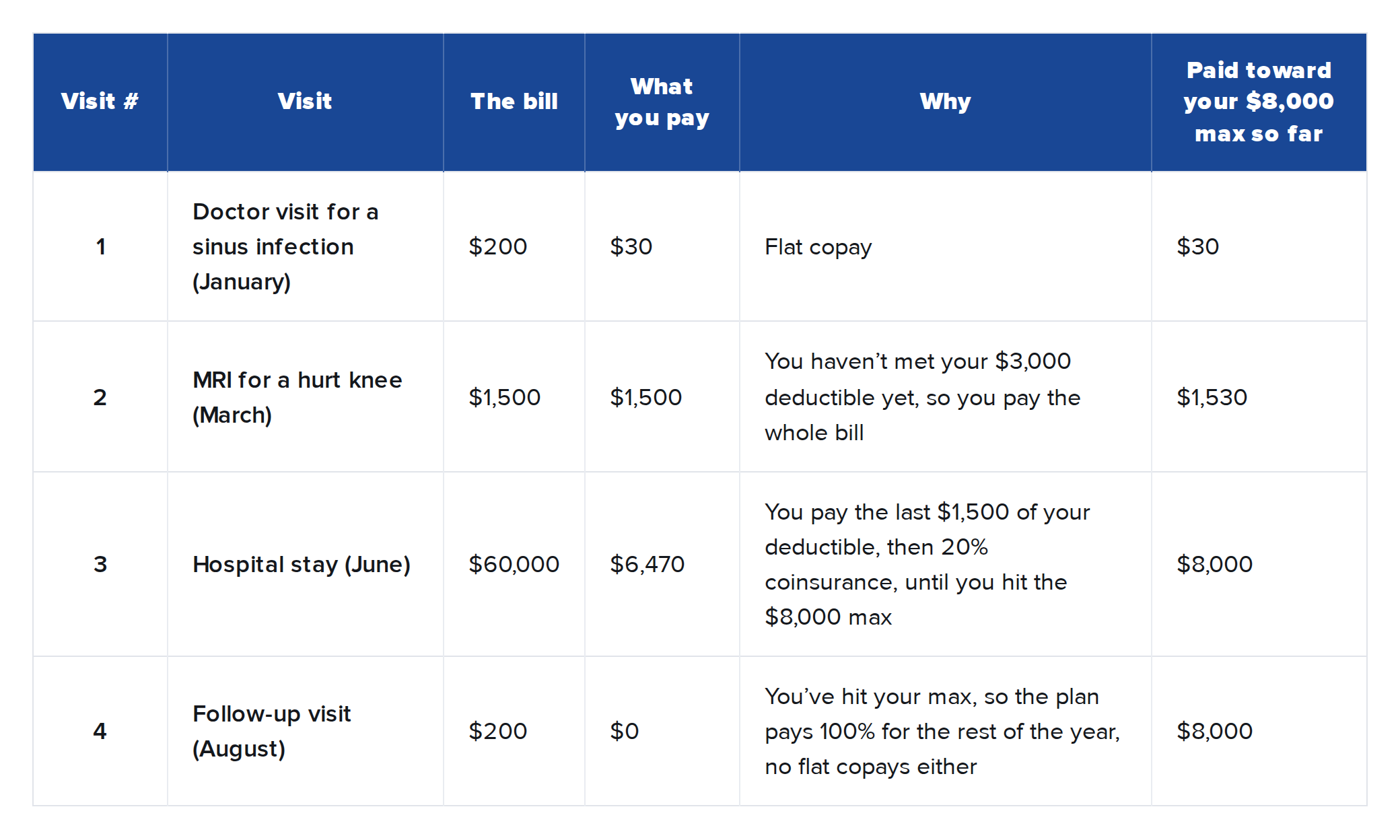
This example shows what started out as a light year for a healthy/normal individual and turned into a worst-case scenario. Keep in mind your grand total for the year will be your premium (if plan goes unused), but if you need a lot more medical attention than anticipated you might be looking at yearly premiums ($4800) + out-of-pocket max ($8,000) plus flat copays until you hit your max out of pocket.
So how do you know how much coverage you need?
Bronze, Silver or Gold: Which Level Fits You?
Marketplace plans come in “metal levels.” Every level covers the same benefits. The difference is how you split the cost: pay more each month and less when you get care, or the other way around.
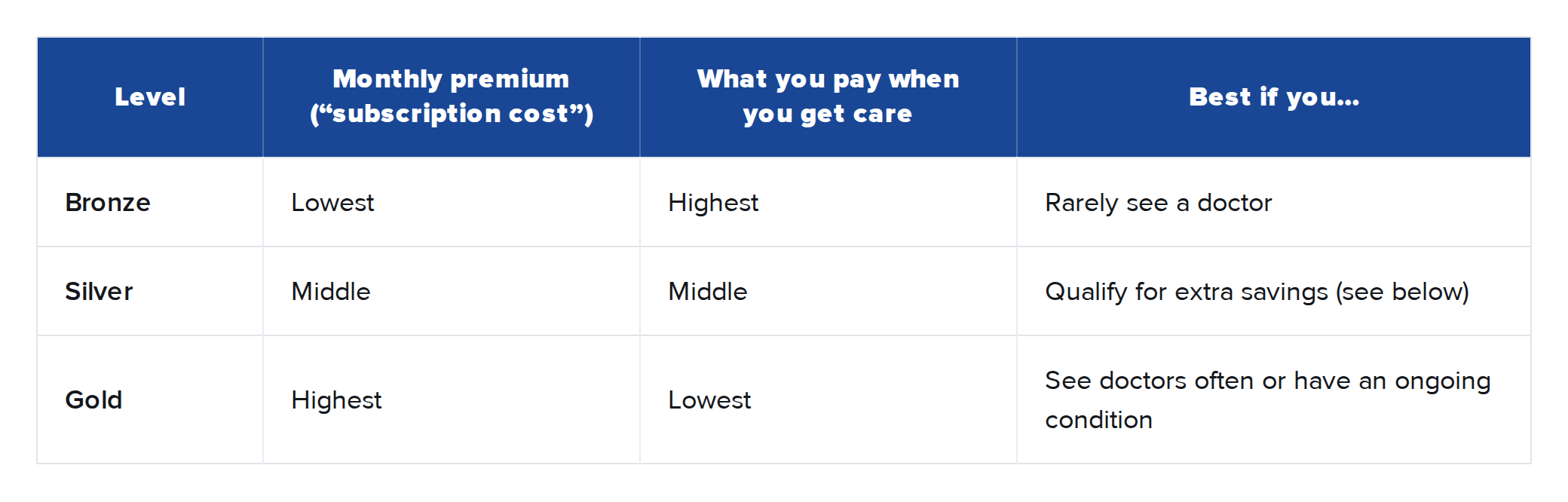
Silver tip: if you earn up to about $39,900 a year as a single person, a Silver plan can come with a much lower deductible and out-of-pocket max, as low as $4,000 for 2027.
Our rule of thumb: don’t pick by premium alone.
Saving $150 a month on a Bronze plan ($1,800 a year) is a bad deal if you’re likely to spend $4,000 more on care.
Where to Buy (and Get Help Paying)
If you don’t get insurance through work, Medicare or Medicaid, you’ll buy it through Connect for Health Colorado. It’s the only place to get financial help with an individual plan, and you’re checked for every program when you apply:
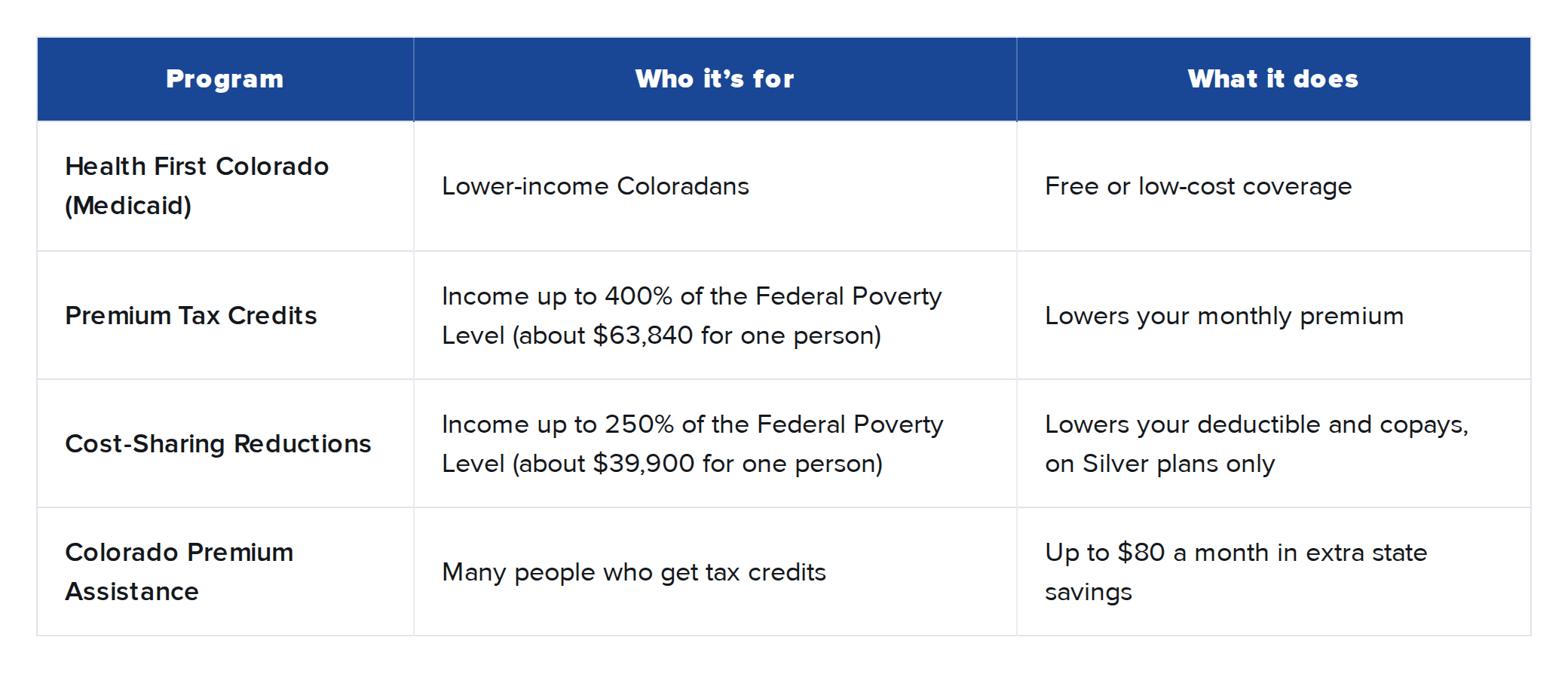
Earn more than that? Above $63,840 for one person ($132,000 for a family of four), you won’t get financial help, so comparing plans matters even more.
When You Can Sign Up
You can’t buy an individual plan whenever you want. There’s one window each year, called Open Enrollment.
Key dates for 2027 coverage
- Nov. 1, 2026: Open Enrollment starts
- Dec. 15, 2026: last day to enroll for coverage starting Jan. 1, 2027
- Jan. 15, 2027: Open Enrollment ends. Enroll Dec. 16 to Jan. 15 and coverage starts Feb. 1
Miss it, and you’ll wait until next November, unless you have a qualifying life event. That opens a Special Enrollment Period. Common ones include getting married, having a baby, moving, or losing coverage through your job. Turning 26 and coming off a parent’s plan counts too, and you generally have 60 days after any of these events to sign up.
Already have a plan? Connect for Health Colorado will automatically renew many customers before Open Enrollment starts. That doesn’t mean your price, network or tax credits stay the same. You can still switch plans any time during Open Enrollment.
Have Cigna? Cigna is leaving Colorado’s individual market. Your coverage lasts through Dec. 31, 2026, so you’ll need a new plan for 2027. Switching during Open Enrollment is the simplest path.
5 Things to Check Before You Buy
- Your worst-case year. Add 12 months of premiums to the plan’s out-of-pocket max. That’s the most the plan could cost you in a bad year.
- Your doctors, hospital and pharmacy. Make sure each one is in the plan’s network. Go outside it and you can end up paying most or all of the bill.
- Your prescriptions. Check that each one is covered and what it will cost. If a drug is expensive on your plan, a prescription discount program may beat it.
- Whether you qualify for help. Apply through Connect for Health Colorado, the only place tax credits and Colorado Premium Assistance apply. Estimate your income carefully and update it if it changes, or you may owe some back at tax time.
- What changed from last year. If you were auto-renewed, compare your new price, network and tax credits. Last year’s best plan may not be this year’s.
The bottom line
You don’t need to become an insurance expert. You need to know your worst-case year, whether your doctors are covered, and whether you qualify for help. And enroll by Dec. 15 for coverage that starts Jan. 1.
That’s exactly what we check for every client, before you enroll, not after the first surprise bill. That’s exactly what we check for every client, before you enroll, not after the first surprise bill.
It’s free to work with us. If you need help hacking your health insurance give us a call 303-225-0073.